More and more studies show that our eating habits are not sustainable in the long run anymore, as our planet can’t keep up with the demand. Although, how did we get here, and what are the exact reasons that make it so emitting? It has many contributing factors from better living standards, through population growth, to our eating habits. Let’s take a closer look.
The rapid world population growth
The world population went through rapid growth in the previous years as it grew from 1 billion people to 7.7 billion only within two centuries (1). This means that seven times more people call this world home than only one hundred years ago. This, in itself, is a good thing, indicating that medical science developed swiftly, allowing more people to live a long and complete life.
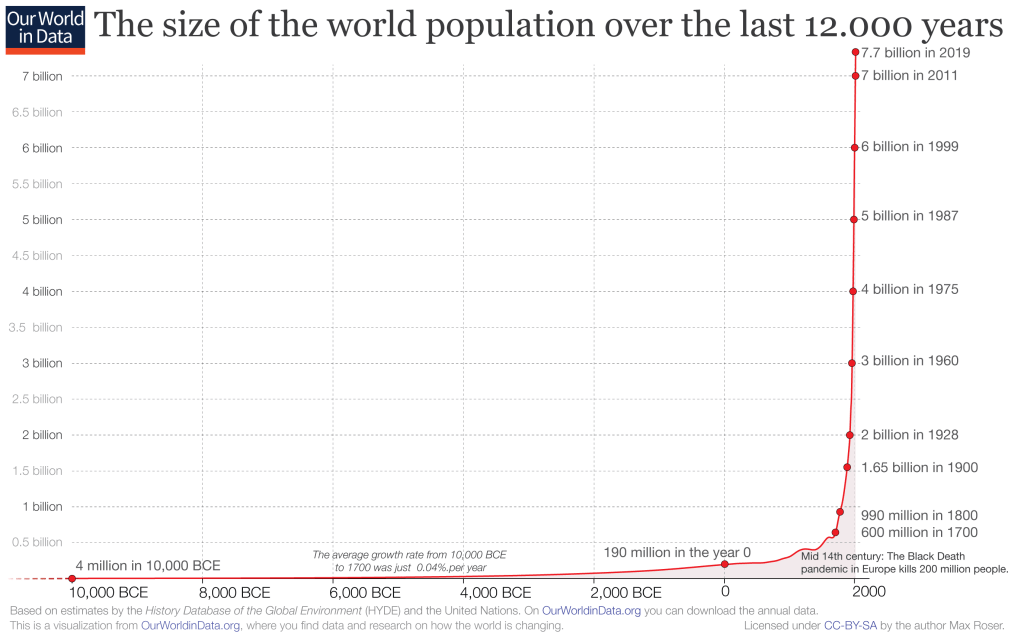
At the moment, the most densely populated areas in the world are Southern Asia and Europe followed by America. From these, the European and American population is slowly growing at this point, while the Asian population went through rapid growth in the previous 50 years. Even though the rate of the world population growth is slowing down, estimations indicate that the size of the human population can even reach 10 billion in the next 100 years (1).
Food consumption at different parts of the world
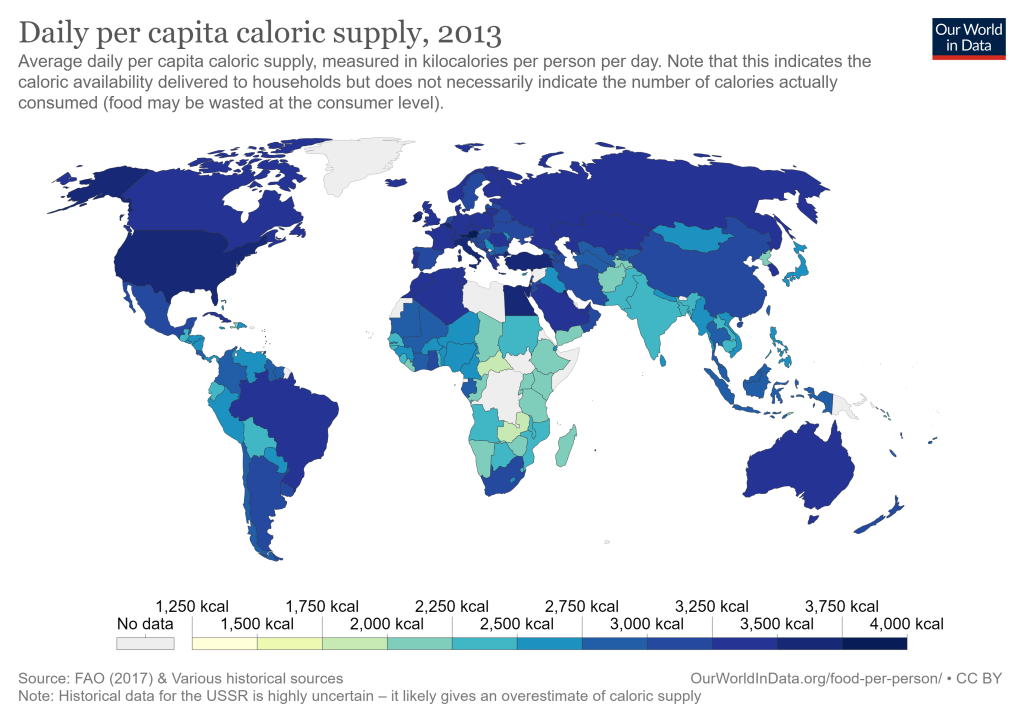
Better living standards, and technical and social progress also brought higher consumption rates. Therefore, our food consumption patterns have changed a lot in the previous years. The average calories consumed in the world per person per day was 2,196 calories in 1961 and is 2,884 calories today and is continuously growing (2). Furthermore, America and Europe are way above the world average with eating more than 3200 calories per person per day, although our natural energy requirement only hits 2100-2300 calories a day.
This leads to an extreme increase in food demand around the world meaning 7 times more people need to eat than a hundred years ago and these people want to eat more calories than ever before.
Meat consumption at different parts of the world
We, humans, have eaten meat ever since we exist, we say, but we have to realise that we are eating more animal-based protein than ever before. The trends of meat consumption have changed throughout the years. In Europe, people today eat 58 grams of animal protein a day 18.18 grams more compared to 1961, and it keeps on growing. Meanwhile, in the USA, an average person consumes 73.87 grams of animal protein a day (2) (3). In conclusion, the increasing number of people populating this planet eat more animal products per capita (especially the western population). This increased demand logically leads to an increase in meat and also dairy production (4).
“In 1961, the world ate 71 million metric tonnes of meat, but by 2002 this had risen to over 245 million – more than a three-fold increase.”
(World Health Organisation, 2004)
Environmental costs
The natural environment and the animals pay the price of this rapid increase in demand for food leading to deforestation, animal suffering and loss of biodiversity. Although, it is not just the animals who should be afraid, but us!
26% of global greenhouse gas emission comes from agriculture (more than all transportation together) which adds a great amount to climate change (6).
As you can see on the picture below, today half of the world’s habitable land is used for agriculture and 77% of that land is for livestock, meanwhile, only 1% of this land is urban area (which includes all human infrastructure) (6). Are you surprised? Because I was when I found out about it.
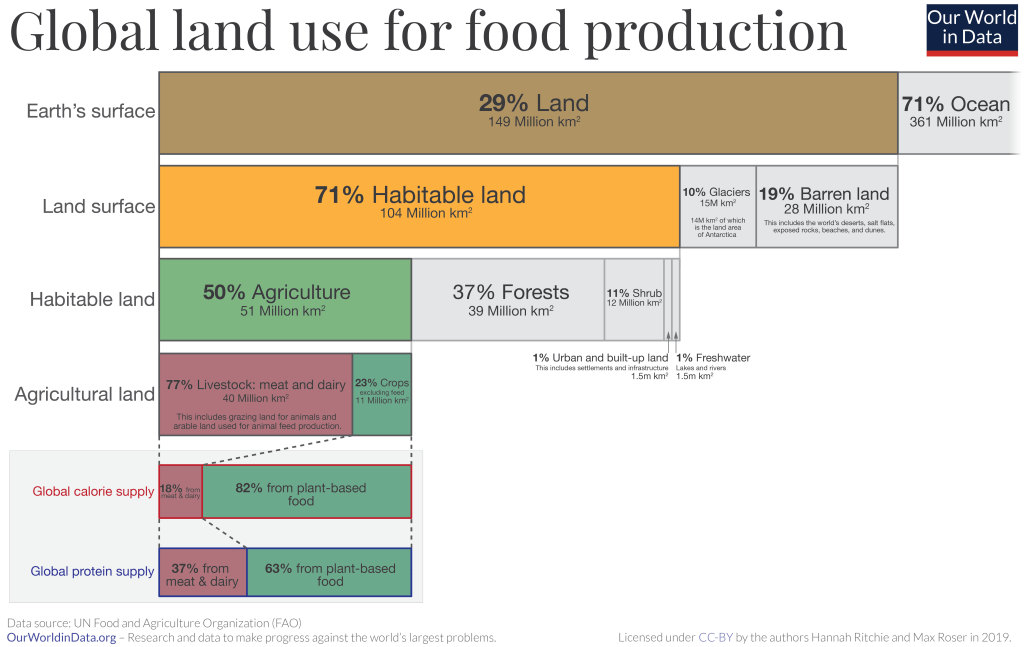
Although we keep this huge land for livestock, we only get 18% precent of our daily calories from animal products globally. From the many different kinds of livestock Beef, Lamb and Mutton have the biggest land usage and the biggest environmental impact. Their environmental impact is measured by greenhouse gas emission per kilogram of the food product.
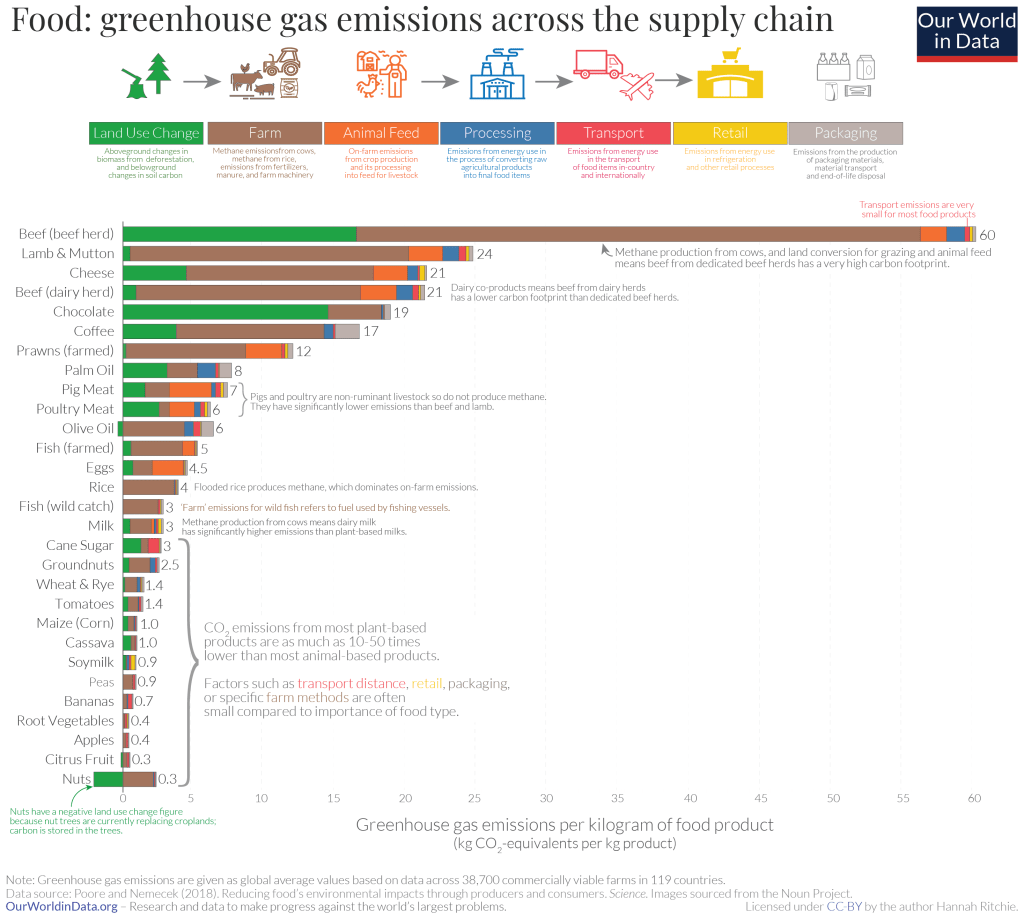
The environmental impact of different foods is made out of land usage, farming (methane emission by animals, fertilizers and machines), animal feed processing, transport, retail and packaging. This chart shows what makes the beef, lamb and dairy industry the most emitting of all: land usage and farming (7). Keeping these animals requires a lot of space and they also release methane gas as part of digesting their food which results in enormous amounts of greenhouse gas emission. 989.03 million cows lived in the world in 2019 (8), which means there is a cow for every 7th person. It also means that the cow population is just as big as the human population was 200 years ago and most of these cows only live to feed us.
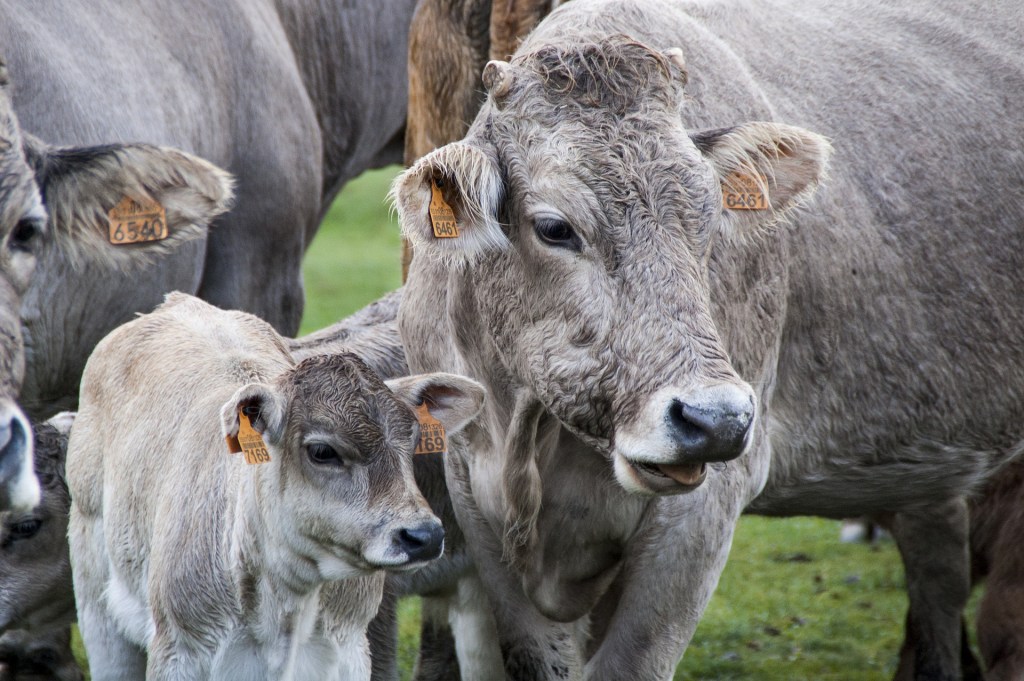
To sum up, we know that the world population is growing, and each person eats more calories per day than ever before. Furthermore, although we reserve a lot of land for livestock, only a small portion of our calory intake is covered by meat. Forests need to get cleared to provide the farmland needed. Moreover, while the trees are going down, the greenhouse gas emission is growing. The most greenhouse gas emission is associated with animals that supply us with red meat: cows, sheep and goats. From these, cowherds have the largest livestock population, making cow farming the most emitting sector in food production.
You have the power to make a change!
Food production is determined by the demand, meaning if we decide to eat less beef and drink less milk, we can reduce the emission of cow farming. Cutting our beef, red meat, and dairy consumption would make a big difference as it has the potential to slow down global warming. You can even make a difference by deciding first to keep a meat-free day each week and later even to keep beef as a “holiday meal”. The possibility is there for everyone, and every little difference you can make in your diet has the potential to reserve better living conditions for our kids/grandkids. If you want to know more about a sustainable diet for the future, click here.
References:
- https://ourworldindata.org/world-population-growth?source=post_page—–d904819ea029———————-#licence
- https://ourworldindata.org/food-supply
- https://ourworldindata.org/diet-compositions
- https://ourworldindata.org/meat-production
- World Health Organization. (2004). Food and agriculture organization of the United Nations. Vitamin and mineral requirements in human nutrition, 2
- https://ourworldindata.org/environmental-impacts-of-food
- https://ourworldindata.org/food-choice-vs-eating-local
- https://www.statista.com/statistics/263979/global-cattle-population-since-1990/
 Foodaware
3 thoughts on “Why our eating habits are less sustainable now than before?”
Comments are closed.